
Step-by-Step Guide to Registering Your Business in the U.S.
- Our Impact Team

- Apr 17
- 4 min read
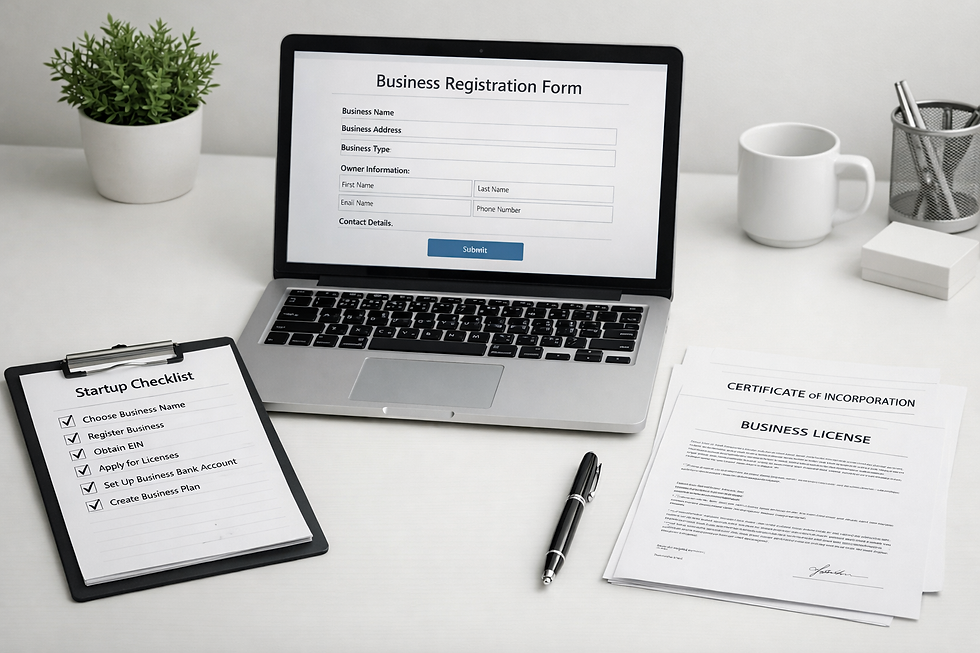
Starting a business in the U.S. is not one single form. The process usually includes choosing your structure, picking and protecting your name, registering with the right state or local agency, getting tax IDs, and securing any required licenses or permits. The U.S. Small Business Administration says your registration steps depend on your location and business structure. In many cases, registration is straightforward once those two pieces are clear.
Step-by-Step Guide to Registering Your Business in the U.S.
Choose your business structure first
This is your first major decision because your structure affects taxes, paperwork, personal liability, and how you register with the state. The IRS lists the most common structures as sole proprietorship, partnership, corporation, and S corporation. The IRS also explains that an LLC is created under state law, and its federal tax treatment depends on how many owners it has and whether it elects corporate tax treatment.
A simple breakdown:
Sole proprietor. Easiest to start, but there is no legal separation between you and the business.
LLC. Common for small businesses because it offers liability protection and flexible tax treatment.
Corporation or S corporation. Often used when a business wants a more formal structure or specific tax treatment.
Choose your business location
Your state, county, and city determine much of your filing process. The SBA states that your location affects registration, licenses, permits, and taxes. This means two businesses with the same name and service may still have different filing requirements if they operate in different states or cities.
Establish a solid business framework—contact us for expert support.
Choose and check your business name
Before you register, decide whether you will operate under your legal name or a separate business name. The SBA explains that if you do business as yourself using your legal name, you may not need to register a name at all. But if you use a brand name or trade name, you often need to register it with state or local government.
A practical approach:
Search your state business registry.
Check your state trademark database if available.
Check federal trademark records if brand protection matters.
Make sure the web domain and social handles fit your brand.
Register your business with your state
If you are forming an LLC, corporation, or other formal entity, you usually register with the state by filing formation documents. For an LLC, this is often called Articles of Organization. For a corporation, it is often Articles of Incorporation. The SBA says you generally need to choose your structure before registering with the state.
If you are a sole proprietor using a business name, you may need a DBA, which stands for “doing business as,” filed at the state, county, or city level depending on where you operate. The exact office and fee vary by jurisdiction.
Get your EIN from the IRS
Your Employer Identification Number, or EIN, is your federal tax ID. The SBA says you need it to pay federal taxes, hire employees, open a business bank account, and apply for licenses and permits. The SBA also says it is free to apply and recommends getting it right after you register your business.
The IRS says you can apply for an EIN online, and the online tool is available during specific hours: Monday through Friday from 6:00 a.m. to 1:00 a.m. Eastern Time, Saturday from 6:00 a.m. to 9:00 p.m. Eastern Time, and Sunday from 6:00 p.m. to 12:00 a.m. Eastern Time. The IRS also says foreign filers without an ITIN cannot use the online assistant.
Get any required state tax IDs
Federal registration is only part of the process. The SBA notes that many businesses also need state tax IDs for income tax, sales tax, or employer taxes, depending on the state and business activity. If you sell taxable goods or services, hire employees, or collect state taxes, this step matters early.
Apply for licenses and permits
Many owners think registration alone is enough. It is not. The SBA says most small businesses need a mix of licenses and permits from federal, state, and local agencies. Federal licenses apply only to certain regulated activities, but local licenses are common even for small service businesses.
Examples of common licensing triggers:
Sales tax permit
Home occupation permit
Professional or occupational license
Health department permit
Zoning approval
Employer registrations
Open your business bank account
Once your entity is registered and your EIN is issued, open a business bank account in the business name. The SBA specifically notes that an EIN is often needed to open that account. Keeping business and personal finances separate makes bookkeeping, tax filing, and liability protection much cleaner.
Keep your business records current
Registration is not a one-time task. The IRS says if your responsible party, address, or location changes, you should update the IRS, and changes in responsible parties must be reported within 60 days using Form 8822-B. State agencies often have their own annual report and renewal requirements as well.
A simple registration checklist
Choose your business structure.
Choose your state and operating location.
Pick your business name and confirm it is available.
File your LLC, corporation, or DBA registration.
Apply for your EIN with the IRS.
Register for any needed state tax accounts.
Apply for licenses and permits.
Open your business bank account.
Track renewal and compliance deadlines.
Common mistakes to avoid
Choosing a structure based on what someone else did, instead of your own goals and tax situation.
Using a business name before checking whether you need to register it.
Paying a third party for an EIN when the IRS issues it for free.
Forgetting state tax registration or local permits.
Mixing personal and business finances after registration.
How We Can Help
Registering your business the right way takes more than filing one document. You need the right structure, the right registrations, and the right financial setup from the beginning. Loomis Reddick and Bishop helps business owners with structure selection, business registration guidance, EIN and compliance support, financial system setup, and the planning needed to build on a strong foundation.
Contact Us
If you are ready to register your business in the U.S. and want expert support through each step, contact the Loomis Reddick and Bishop Impact Team. Get help setting up your business with clarity, structure, and confidence.

We Transform Your Vision Into Reality, Empowering You to Thrive & Go Further Faster!


Comments