
Choosing the Right Business Structure: LLC, S-Corp, or Sole Proprietor?
- Our Impact Team

- Apr 16
- 3 min read
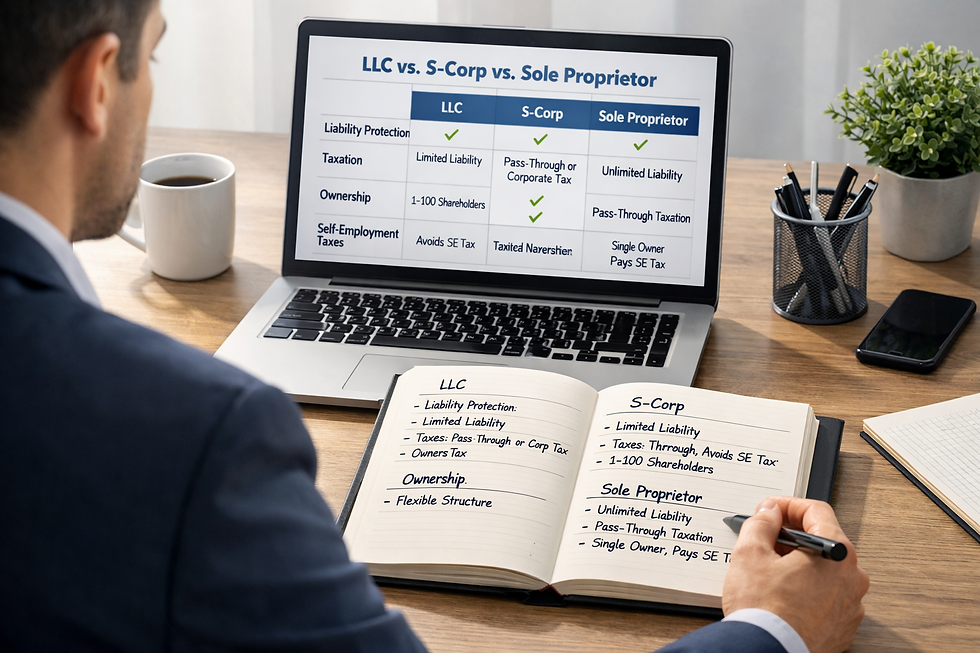
Choosing the right business structure is one of the most important decisions you will make when starting your business. This choice affects your taxes, liability, and how you operate daily. Many entrepreneurs rush this step or choose based on what they hear from others. The right structure depends on your goals, income level, and growth plans.
What Is a Sole Proprietor?
A sole proprietorship is the simplest structure.
Key features:
No formal registration required in many cases
You and the business are legally the same
Income is reported on your personal tax return
Pros:
Easy and low cost to start
Minimal paperwork
Cons:
No liability protection
Personal assets are at risk
Limited credibility with some clients and lenders
Best for:
Side hustles
Low-risk businesses
Testing an idea
What Is an LLC?
An LLC, Limited Liability Company, separates you from your business.
Key features:
Legal protection for your personal assets
Flexible tax options
Simple management structure
Pros:
Protects your personal assets
Easy to manage compared to corporations
Can choose how you are taxed
Cons:
Requires registration and annual compliance
Fees vary by state
Best for:
Small to mid-sized businesses
Service-based businesses
Entrepreneurs ready to operate seriously
What Is an S-Corporation?
An S-Corp is not a business type. It is a tax election.
You must first form an LLC or corporation, then elect S-Corp status.
Key features:
Allows you to split income into salary and distributions
Can reduce self-employment taxes
Pros:
Potential tax savings
More structured payroll approach
Cons:
More complex compliance
Payroll requirements
Additional accounting costs
Best for:
Businesses earning consistent profit
Typically when net income reaches $50,000 or more
Owners ready for structured financial management
Key Differences at a Glance
Sole Proprietor:
No separation between you and the business
Simple setup
Higher personal risk
LLC:
Legal protection
Flexible and scalable
Moderate setup and compliance
S-Corp:
Tax strategy, not a structure
Best for higher income businesses
Requires strong financial systems
How to Choose the Right Structure
Ask yourself:
Do you need liability protection? If yes, avoid sole proprietor.
How much do you expect to earn? Higher profits may benefit from S-Corp election.
Are you ready for compliance and structure? S-Corp requires payroll, reporting, and discipline.
Do you plan to grow and scale? An LLC provides flexibility as you grow.
Common Mistakes to Avoid
Choosing a structure based on trends, not strategy
Delaying setup and operating without protection
Electing S-Corp too early without enough profit
Not understanding tax implications
Make decisions based on numbers, not assumptions.
Final Thought
Your business structure sets the foundation for how you operate, pay taxes, and protect your assets. Starting with the right structure saves you time, money, and stress as your business grows.
How We Can Help
Choosing the right structure requires more than basic knowledge.
Loomis Reddick and Bishop supports you with:
Business structure selection based on your goals
Business registration and compliance
Tax strategy and planning
Accounting system setup
Ongoing financial guidance
You get clear direction and a structure that supports your growth.
Contact Us
Do not guess when it comes to your business foundation. Connect with the Loomis Reddick and Bishop Impact Team for expert guidance and hands-on support. Set up your business the right way. Protect your assets. Position your business for long-term success.

We Transform Your Vision Into Reality, Empowering You to Thrive & Go Further Faster!


Comments